



Bernie Dugan works closely with operators in the field to solve real-world power challenges across telecom, public safety, and critical communication sites. His perspective reflects practical experience supporting networks as they evolve.
Power reliability today is less about a single outage event and more about how well a system handles constant change.
At HCI Energy, much of our work begins with sites that are technically “working,” but they are operating closer to their limits than anyone intended. Loads have grown, equipment has changed, and power architectures have been extended incrementally to keep pace.
Over time, this has left many sites with AC and DC systems layered together in ways they were never designed to coexist. The result is unnecessary power conversions, hidden failure points, and operational risk that remains invisible until something breaks.
This article looks at why traditional AC and DC approaches are increasingly strained in modern networks and why power systems need to do more than simply deliver energy. By reducing dependence on fragile conversion points and providing a flexible foundation that can adapt as loads and equipment evolve, HCI Energy’s technology is designed to mitigate today’s AC/DC challenges while future-proofing power infrastructure for what comes next.
To understand how these challenges develop, it helps to look at how power systems are originally designed and how long they are expected to remain in place.
Power Systems Outlasting Their Assumptions
Power systems tend to outlast the assumptions they were designed around. Many sites in service today were built when networks were simpler, equipment lifecycles were shorter, and power architectures were expected to remain largely unchanged after installation. As networks have evolved, power infrastructure has often been extended incrementally rather than re-examined holistically.
That approach has worked, but it has also introduced complexity and risk that are increasingly difficult to ignore.
How Sites End Up with Layered Power Architectures
It is common to find sites that rely on an AC UPS for backup power, while the equipment itself immediately converts that AC back to DC internally. In many cases, separate DC systems are added later as requirements change or new equipment is introduced.
Each layer exists for a reason, but together they create a power architecture that is more complex than it needs to be. More devices, more conversions, and more interfaces increase the number of things that can fail and the effort required to manage them.
This complexity is rarely intentional. It is usually the result of practical decisions made over time.
Failure Points Hidden Inside the Equipment
One consequence of layered architectures is that critical power conversion often occurs inside the equipment or with accompanying power supplies rather than within the power system itself. AC-to-DC power supplies inside radios and telecom gear are a well-known source of failures.
When these supplies fail, the impact is immediate. Recovery depends on replacement parts and site access, which can turn a single component failure into an extended outage. From an operational perspective, this raises a reasonable question.
If internal power supplies are a common failure point, should they be the only path for delivering DC power to the load?
Designing for Change Instead of Static Assumptions
Traditional UPS systems are typically sized once and expected to serve the site for their entire life. This assumes that loads, redundancy requirements, and power distribution models will remain relatively stable.
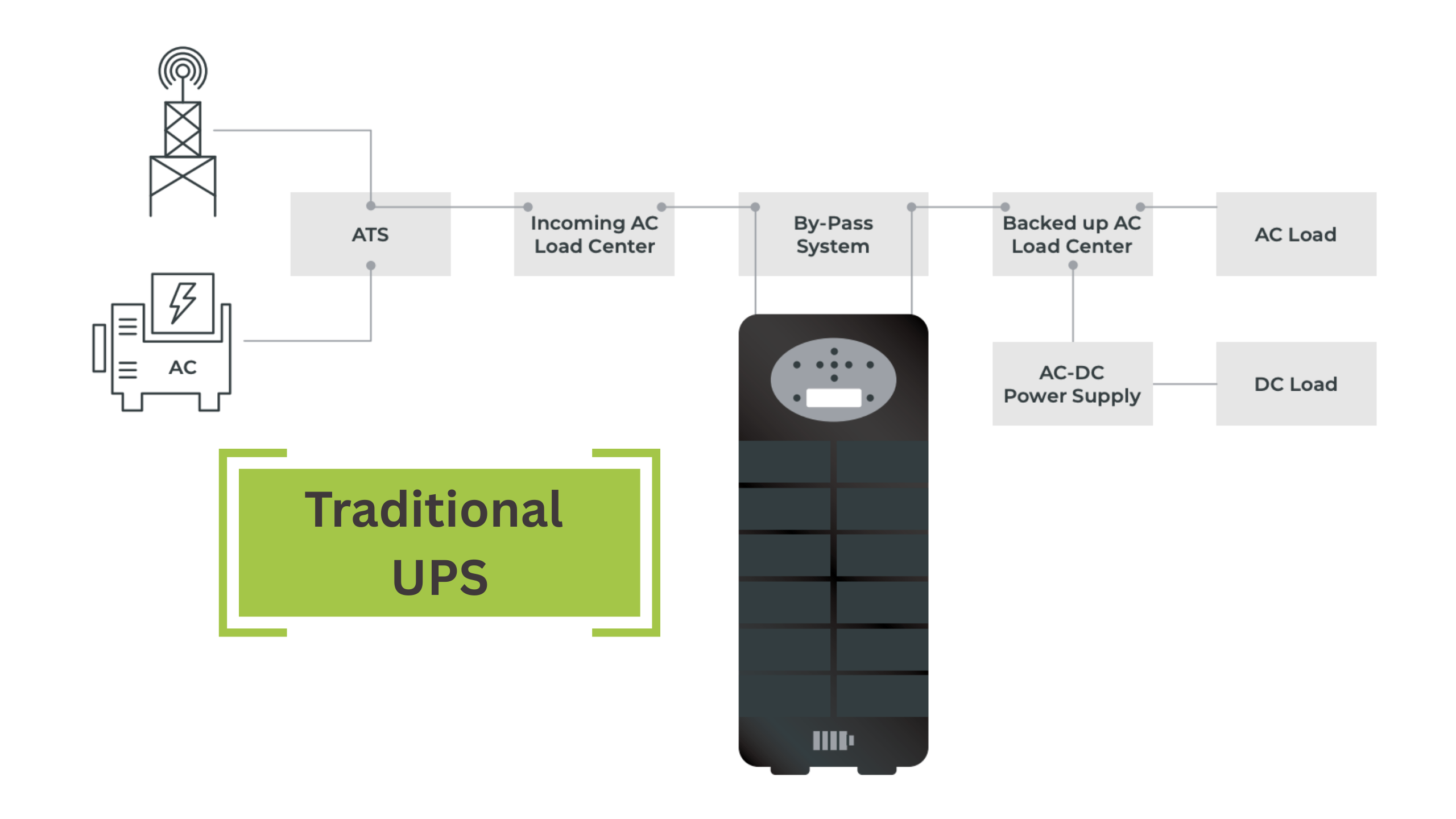
In practice, many sites evolve gradually. Loads grow, equipment changes, and resilience expectations increase. Systems that cannot adapt tend to force either over-provisioning upfront or disruptive replacements later.
A power architecture that can scale and adjust over time reduces both capital risk and operational disruption. Addressing these constraints requires rethinking how AC and DC power are delivered and managed across the site.
A Different Way to Think About AC and DC
The ZPM, the Zero-glitch Power Module, was developed in response to these challenges. Rather than forcing a choice between AC or DC power architectures, it supports both within a single platform.
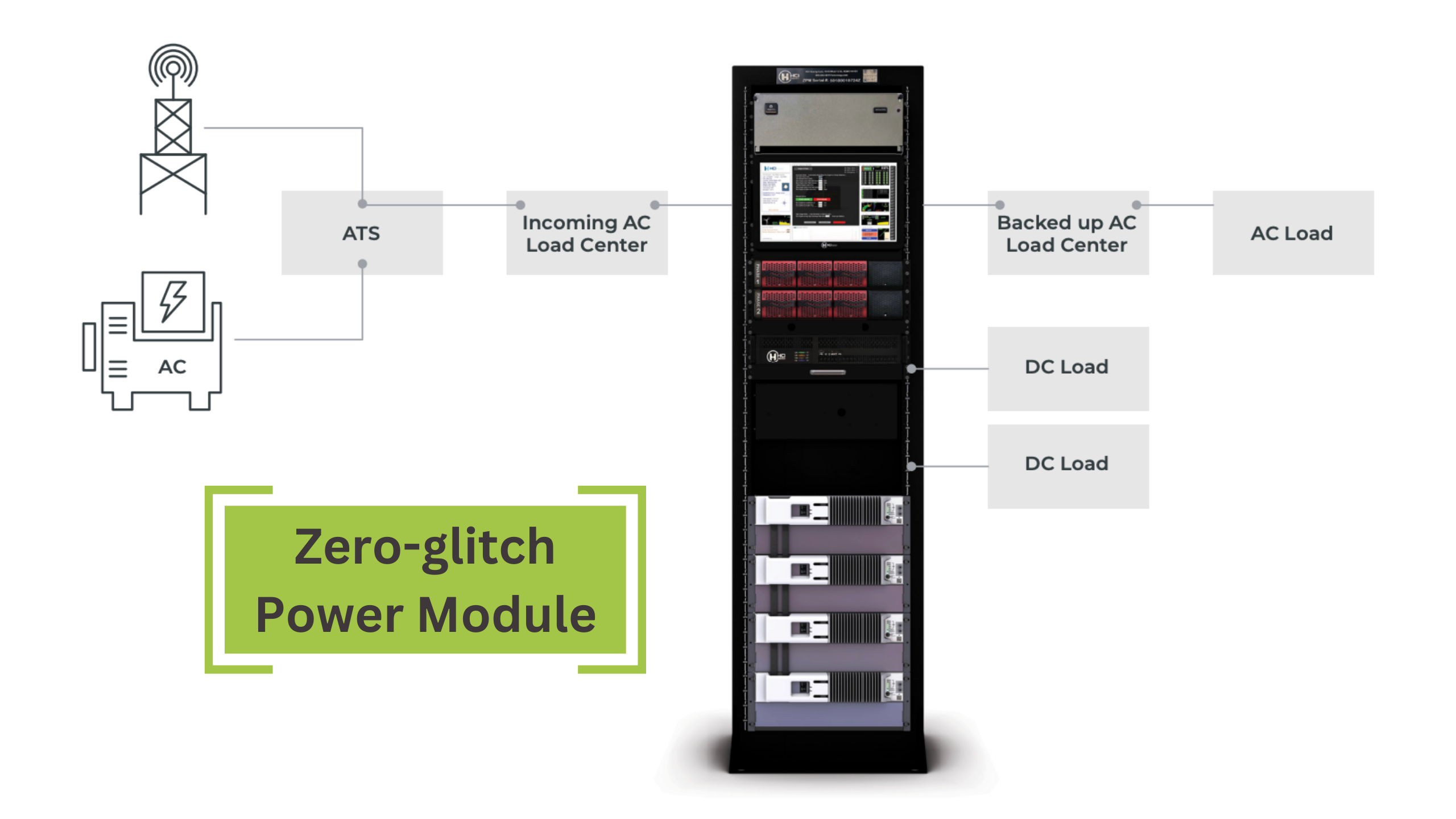
This allows operators to maintain existing AC-based designs while introducing a shared DC backbone that can be used as equipment is upgraded or as internal power supplies fail. In some cases, equipment can be connected directly to DC, bypassing failed or unnecessary AC-to-DC conversions.
This approach is already being used in the field by organizations such as the Kansas Department of Transportation, where radios can remain in service as power components are replaced or upgraded.
Reliability Over the Full Life of the Site
Battery maintenance has long been a recurring challenge in backup power systems. Short replacement cycles drive cost, require regular site access, and introduce failure risk between maintenance events with limited awareness of issues until the point of failure.
The ZPM uses long-life lithium-based batteries with an expected service life of up to 20 years. This aligns energy storage with the operational lifespan of the site rather than forcing repeated replacement cycles. The result is a power system that is designed for long-term reliability rather than periodic intervention.
Visibility as a Core Requirement
As sites become more distributed and harder to access, visibility into power system performance becomes critical. Remote monitoring, configurable alarms, and historical data support earlier detection of issues and more informed planning.
The ZPM incorporates monitoring and remote access as part of the system design, enabling operators to manage power infrastructure proactively rather than reactively.
A Question Worth Re-Examining
The shift from static networks to continuously evolving infrastructure has changed the role of power systems. They are no longer just backup components. They are part of the operational backbone.
For many operators, the real question is not whether AC or DC is the right answer, but whether existing power architectures still reflect how networks actually operate today.
Rethinking that foundation may be one of the most practical steps toward improving reliability, reducing risk, and preparing sites for what comes next.
When power systems are designed to support change rather than resist it, operations tend to get simpler. Re-examining AC and DC strategies is often a good place to start.

Share this
-1.png)
Power Without the Pause: Why the Zero-glitch Power Module Outshines a Standard UPS
.png)
HCI Energy Awarded for its Impact on Emergency Service and Disaster Response