



HCI Energy was recently invited to participate in Idaho’s statewide interoperability and emergency communications meeting held in the city of Chubbuck. The meeting brought together city and county communications leaders, along with statewide interoperability staff, to review technologies supporting emergency and interoperable communications systems.
Much of the conversation centered on power infrastructure. As networks expand and equipment ages, participants described a wide range of operating environments, from urban facilities to remote sites that remain grid-connected but serve large geographic areas. In many cases, access is limited, and outages carry real operational impact.
A few insights surfaced repeatedly.
System visibility and operational awareness
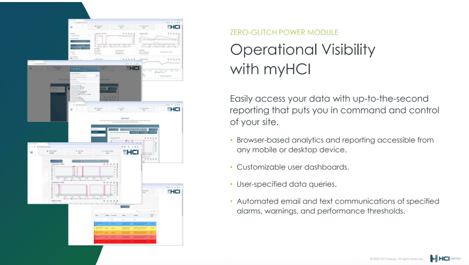 One of the clearest takeaways was how little visibility many operators have into systems that are technically “working.”
Participants described power systems that continue to operate but offer limited insight into their condition. Monitoring is often restricted to basic alarms that activate after a failure occurs, with little visibility into battery health, thermal conditions, or gradual performance degradation.
The discussion focused on:
- How systems can be monitored and managed remotely
- What access operators have when troubleshooting
- Whether standard interfaces like SNMP are supported
- What information is available before something fails
The emphasis was not on adding new capability but on better understanding how systems behave day to day.
Battery safety and backup duration
Battery safety came up repeatedly, particularly in relation to Lithium-based systems. Much of the concern reflected unfamiliarity with Lithium battery behavior rather than experience with incidents in the field. Attendees wanted to understand how modern battery systems are monitored, protected, and managed once deployed.
Those questions were closely tied to confidence in battery-backed runtime. With a ZPM unit on-site, the attendees wanted to understand how the ZPM fits into existing systems and makes battery behavior visible, rather than leaving operators to rely on assumptions.
From there, attention turned to backup duration. Many jurisdictions rely on UPS systems with lead-acid or Lithium-ion batteries installed years earlier, and several operators acknowledged uncertainty around how much battery-backed runtime is actually available as batteries age and system insight remains limited. That uncertainty shapes how operators respond when something goes wrong.
What mattered was predictability. Known backup windows give teams time to diagnose issues, coordinate responses, and restore systems without immediate pressure. By making battery behavior and available runtime visible, the ZPM shifted the conversation from assumed backup time to measured capacity. While ZPM does not turn legacy lead-acid batteries into “smart” batteries, it provides operators with clearer insight into how battery-backed systems perform under real loads and operating conditions.
When deployed as part of HCI Energy’s integrated Cabinet or Hybrid Power Shelter systems, battery safety is further supported through enclosure design and thermal management.
In Idaho, the discussion ultimately highlighted that the greater operational risk today is not battery chemistry itself, but the lack of visibility into aging battery systems that many agencies already depend on.
Moving beyond a UPS-only or full DC redesign

Another topic that stood out was how many participants initially framed their options. Most described a binary choice: continue maintaining existing UPS systems or pursue a full DC site redesign.
Both approaches are costly and disruptive, particularly when applied across multiple sites and jurisdictions.
The ZPM supports existing AC loads while allowing a planned transition to DC over time, removing the need to choose between those two paths. For many in the room, that capability was not something they had previously considered.
Implications for state and local agencies
Across counties, the same conditions kept coming up:
- Power systems deployed unevenly over time
- Limited visibility into system health
- Backup runtimes that are assumed rather than verified
- Growing reliance on sites that are remote or difficult to access
More broadly, the conversation reflected a shift in focus. Agencies are spending less time thinking about power only in the context of outages and more time trying to understand how systems behave under normal operating conditions.
These questions are not unique to Idaho. State and local agencies responsible for interoperable and emergency communications are grappling with similar challenges as networks continue to evolve.
If your state or region convenes interoperability or emergency communications meetings and would like HCI Energy to participate in technical discussions around power system behavior, you can reach us here:


Share this
HCI Energy Expands Product Leadership to Advance Reliable, Intelligent Power Solutions
Inside Towers Spotlights HCI’s Power Cabinet